Clara Lange · 18 September 2026
Global Physics Initiatives Inspire Blended Methods for Water Filtration and Soil Assessment
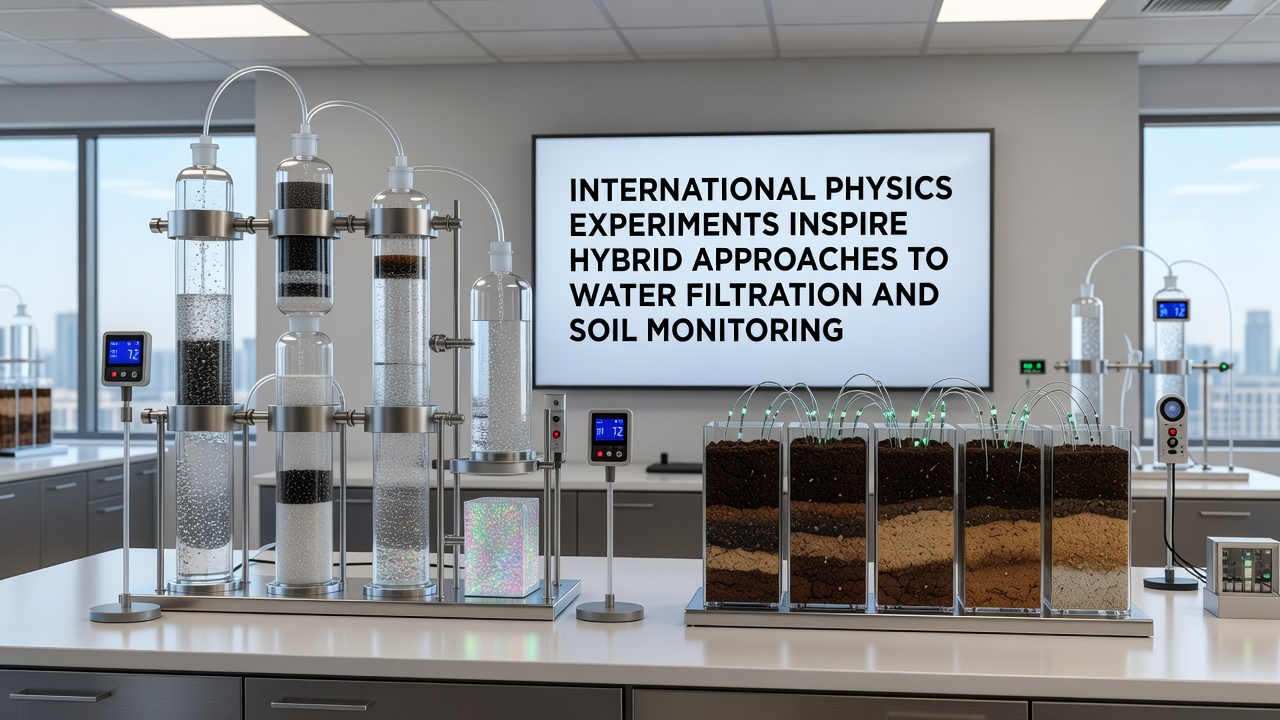
Physics experiments conducted across multiple continents continue to shape practical tools for environmental management, particularly in areas where water quality and soil conditions require precise oversight. Researchers from institutions in Europe, North America, and Asia have pooled findings from particle tracking studies and fluid mechanics trials, leading to systems that merge sensor technology with membrane engineering for dual-purpose applications. These efforts draw on principles such as quantum dot imaging and neutron scattering, which provide detailed maps of particle movement in liquids and porous materials alike.
Foundations in Cross-Border Physics Research
Experiments at facilities like those operated under the International Atomic Energy Agency have supplied data on isotopic signatures that help trace contaminants through soil layers and water columns. Teams combine this information with results from synchrotron light source analyses, which reveal molecular structures at scales previously inaccessible. In one documented case from 2024, physicists in Japan and Germany shared datasets on magnetic resonance techniques, allowing engineers to refine filtration layers that capture microplastics while simultaneously monitoring nutrient levels in adjacent farmland. Such exchanges accelerate the shift from single-discipline tools toward integrated platforms that address both filtration efficiency and real-time soil diagnostics.
Data from the National Science Foundation indicates steady growth in collaborative grants focused on these intersections, with funding allocated for projects that test hybrid prototypes in field conditions. Observers note how fluid dynamics models originally developed for accelerator cooling systems now guide the design of low-pressure filters that reduce energy demands during operation. These adaptations appear in pilot installations across several river basins, where equipment logs show consistent performance metrics over extended periods.
Applications in Water Filtration Systems
Hybrid approaches often start with physics-based sensors embedded in filter housings. Optical interferometry, refined through astronomy-related research, detects changes in water turbidity and chemical composition without direct sampling. When paired with bio-inspired coatings derived from surface tension studies, these sensors trigger automated adjustments that maintain flow rates while blocking specific pollutants. Field trials in Canadian watersheds have demonstrated how such combinations extend filter lifespan by up to thirty percent compared with conventional setups, according to reports from Environment and Climate Change Canada.
September 2026 marks the scheduled rollout of an expanded monitoring network in the Danube region, where physics-derived acoustic sensors will integrate with existing filtration units to flag salinity spikes linked to upstream agricultural runoff. This timing aligns with updates from the European Environment Agency on revised water directives, which emphasize continuous data collection over periodic testing alone.
Advancements in Soil Monitoring Techniques
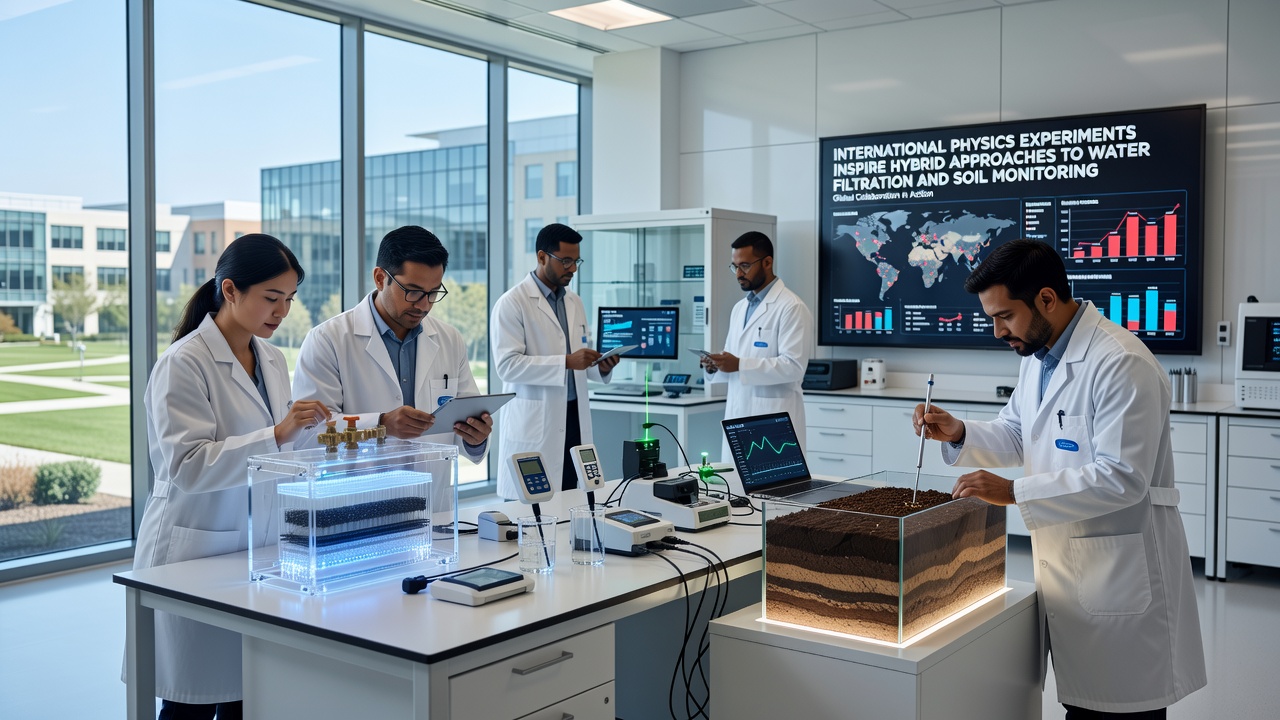
Soil assessment benefits similarly from neutron radiography methods honed in materials science laboratories. These techniques map moisture distribution and heavy metal concentrations at depths reaching two meters, feeding information into models that predict erosion risks. Researchers in Australia have adapted muon tomography, previously used in volcanic imaging, to create portable units that scan large agricultural plots in hours rather than days. The resulting datasets integrate with filtration control systems upstream, enabling coordinated responses that adjust irrigation and treatment cycles based on shared environmental variables.
Studies published through the Commonwealth Scientific and Industrial Research Organisation highlight cases where combined physics tools identified subsurface pathways for fertilizer leaching before visible crop stress appeared. Engineers then calibrated nearby water treatment modules to preemptively handle increased nutrient loads, illustrating the practical linkage between the two domains. Such feedback loops rely on standardized data protocols developed during international workshops held in 2025, ensuring compatibility across different hardware platforms.
Integration Challenges and Ongoing Projects
Scaling these hybrid systems requires attention to calibration standards and power supply constraints in remote locations. Teams address these issues by incorporating photovoltaic elements tested in high-energy physics detector arrays, which maintain sensor operation during variable weather. In regions with limited infrastructure, modular designs allow incremental upgrades without full system replacement. Evidence from multiple test sites shows that initial deployment costs decrease when components serve overlapping functions in water and soil contexts.
What's interesting is how earlier particle physics simulations of granular flow now inform predictive algorithms for soil compaction under changing climate patterns. These algorithms run on edge computing devices attached to filtration stations, providing localized forecasts that guide maintenance schedules. International partnerships continue to refine the underlying code through shared repositories, with contributions arriving from labs in South Korea and Brazil that focus on tropical soil varieties.
Conclusion
International physics experiments supply foundational data and instrumentation concepts that enable hybrid water filtration and soil monitoring systems to operate with greater precision and efficiency. Ongoing field applications, including the September 2026 network expansions, demonstrate measurable improvements in contaminant detection and resource management. Continued collaboration across research networks supports further refinement of these blended methodologies, grounded in verified experimental outcomes rather than isolated innovations.