Sam Hoffmann · 16 October 2026
Cross-Border Student Projects Link Microscopy Training With Neural Network Models for Tracking Regional Environmental Shifts
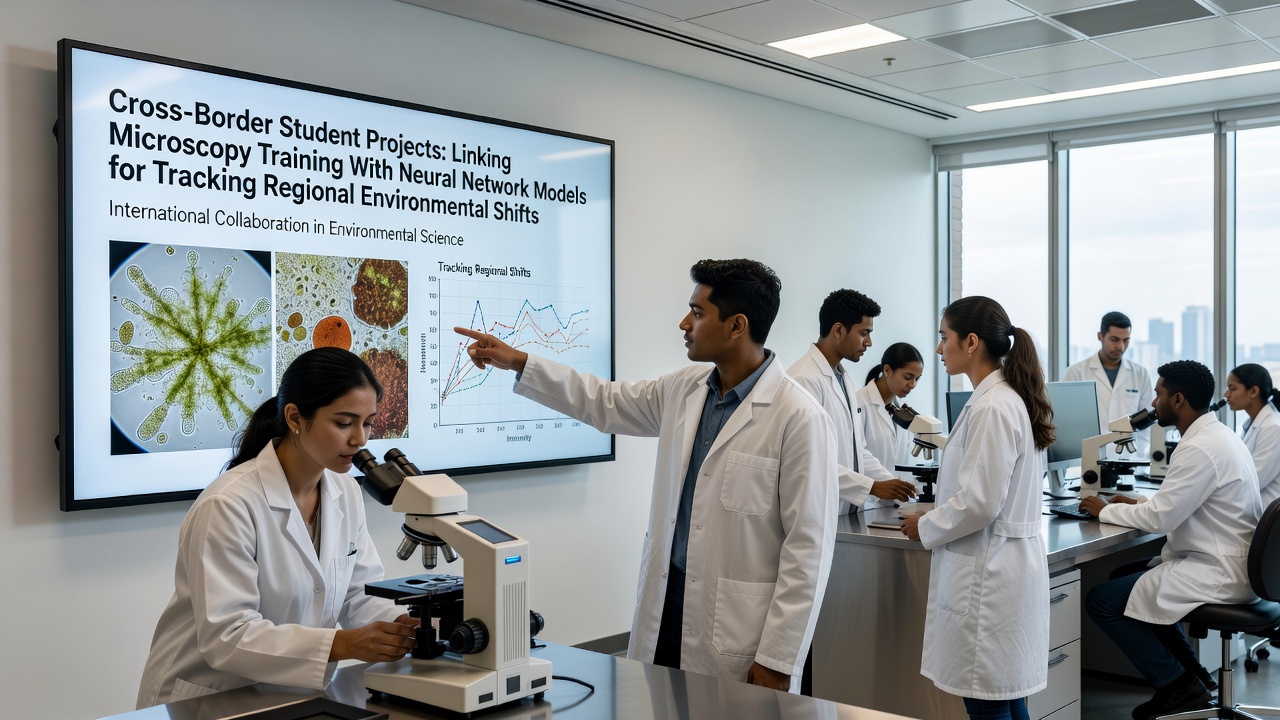
Universities across Europe and North America have expanded student exchange programs that combine hands-on microscopy instruction with machine learning applications, and these initiatives now focus on monitoring environmental changes in specific regions through detailed sample analysis and predictive modeling. Participants collect soil, water, and vegetation specimens in the field, prepare slides for microscopic examination, and feed the resulting imagery into neural networks designed to detect subtle shifts in ecosystem composition over time.
Project Structure and Participant Roles
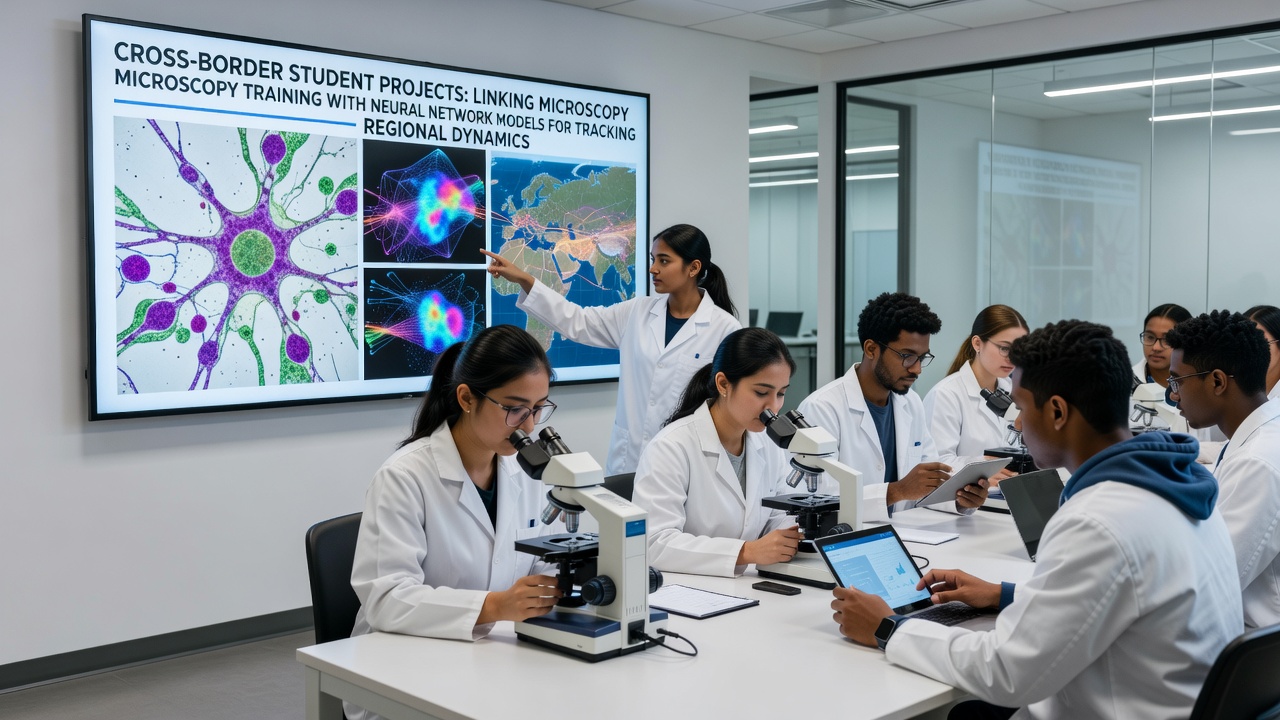
Teams typically include undergraduates and early-career researchers from at least three different institutions, each contributing specialized knowledge in either optical techniques or computational methods, while shared protocols ensure consistent data collection across borders. Training modules begin with basic light and electron microscopy skills that allow students to identify cellular structures, mineral particles, and microbial communities, after which participants transition to annotating datasets for supervised learning tasks. In October 2026 several cohorts are scheduled to present preliminary models at a joint symposium hosted by partner laboratories in Poland and Canada.
Technical Integration of Microscopy and Neural Networks
Microscopy provides high-resolution images that capture fine-scale features invisible to satellite sensors, and neural networks process these images to classify changes such as shifts in diatom populations in freshwater systems or alterations in soil aggregate structures following land-use conversion. Researchers have developed convolutional architectures that segment individual cells or particles with accuracy rates above 85 percent when trained on multi-country datasets, and transfer learning techniques allow models developed in one region to adapt to samples from another without complete retraining. Data pipelines incorporate metadata on collection dates, GPS coordinates, and environmental conditions to improve temporal tracking of regional trends.
Regional Case Examples
One ongoing collaboration examines alpine meadow degradation across the Carpathians and the Rocky Mountains, where students use polarized light microscopy to quantify mineral weathering rates and pair those observations with recurrent neural networks that forecast vegetation cover loss under varying precipitation scenarios. Another group focuses on coastal wetland sites in the Baltic and Pacific Northwest regions, applying fluorescence microscopy to track phytoplankton community turnover and training graph neural networks to model nutrient flow alterations linked to temperature increases. These projects generate open-access image repositories that other teams can access for further model refinement.
Data Sharing and Standardization Efforts
Partners have adopted common file formats and annotation standards developed through academic consortia, which reduces compatibility issues when merging datasets collected under different national regulations. According to reports from the European Environment Agency, standardized environmental monitoring protocols improve the reliability of trend analyses across political boundaries. Students also learn version control practices for both raw imagery and trained model weights, ensuring reproducibility when projects transition between successive cohorts.
Training Outcomes and Skill Development
Surveys of past participants indicate that involvement in these projects increases proficiency in both laboratory techniques and programming languages used for model deployment, while cross-cultural collaboration builds experience in navigating differing institutional review processes for sample collection permits. Graduates have gone on to roles in environmental consulting firms and government agencies, applying the combined microscopy and neural network workflow to new geographic areas. Institutions continue to refine curricula based on feedback from field deployments and model validation results.
Conclusion
Cross-border student initiatives that merge microscopy training with neural network development continue to generate detailed, localized datasets on environmental shifts while preparing researchers for integrated scientific workflows. Ongoing expansions in October 2026 and beyond will likely incorporate additional sensor types and larger model architectures, further strengthening the connection between microscopic observations and regional-scale environmental tracking.